Why Domma never uses eval
Knockout-style bindings usually mean compiling strings into code at runtime. Domma Reactive parses them by hand instead, so it runs under a strict Content Security Policy.

Declarative bindings are a lovely way to build an interface. You write data-bind-text="user.name" in your HTML, and the page stays in step with the data from then on. The catch, in most libraries that work this way, is how that little string becomes something that runs.
The usual shortcut
The quickest way to turn user.name or count > 1 ? 'items' : 'item' into a value is to hand it to JavaScript's own compiler - eval, or its close cousin new Function(...). Knockout, the library that made this style popular, compiles binding strings with the Function constructor. It works, and it is short.
It also means the page is running strings as code. That is exactly what a Content Security Policy exists to stop. A policy of script-src 'self' tells the browser: only run scripts that came from my own server, and never compile strings into code. It is one of the most effective defences a site has against cross-site scripting - if an attacker manages to get text onto your page, a strict policy stops that text from running.
A library that needs eval forces you to add 'unsafe-eval' to the policy, and the name is honest about what that does.
Parsing by hand
Domma Reactive - the reactive core inside Domma, published on its own - does not use eval or the Function constructor anywhere. Binding expressions are read by a small hand-written parser: it tokenises the string, builds a tree of the parts it understands, and evaluates that tree against your data.
What it understands is deliberately a subset of JavaScript expressions: property paths, the usual operators, comparisons, the ternary, function calls on functions you provide, and - since 1.2 - object and array literals such as {active: isOn.value} or [a, b]. What it refuses, it refuses clearly: a binding that will not parse logs one warning naming the expression, the element and the position of the problem, and is skipped. Everything else on the page keeps working.
Refusing is part of the design. Keys like __proto__ and constructor are rejected in object literals, and there is no way for a binding to reach outside the data you gave it. A binding is a description of a value, not a place to run code.
What you get
- The whole library works under
script-src 'self'with nounsafe-eval. - No build step: a
<script>tag on a page your server already rendered is enough. - About 21 KB gzipped, no dependencies, MIT-licensed, and 996 tests.
- Errors you can act on, instead of a page that silently stops updating.
Safe by default, not just safe to parse
Version 1.2 took the same idea one step further. A common slip is binding the observable itself instead of its value - data-if="show" rather than data-if="show.value". An observable is an object, and objects are truthy, so the content used to show. Now the binding warns once - "show" is an observable, not its value - use "show.value" - and treats it as empty: hidden content stays hidden. When a mistake happens, the failure is the safe one.
Inside Domma CMS
Domma CMS uses Domma Reactive throughout its admin, and the public pages you build with collections, forms and components run on the same library. When you ship a Domma CMS site with a strict Content Security Policy, the bindings are not the thing that makes you loosen it.
If you want to try it on its own, the Domma Reactive site has a running demo beside every feature, a comparison with Knockout, Alpine.js and petite-vue, and a tutorial that builds a contacts page in about 120 lines. The source is on GitHub.
Keep reading
Domma Reactive 1.3: array helpers in your bindings
Domma Reactive 1.3.0 adds thirteen built-in array helpers to binding expressions, with observable item reads tracked so counts, filters and totals update as the data changes.
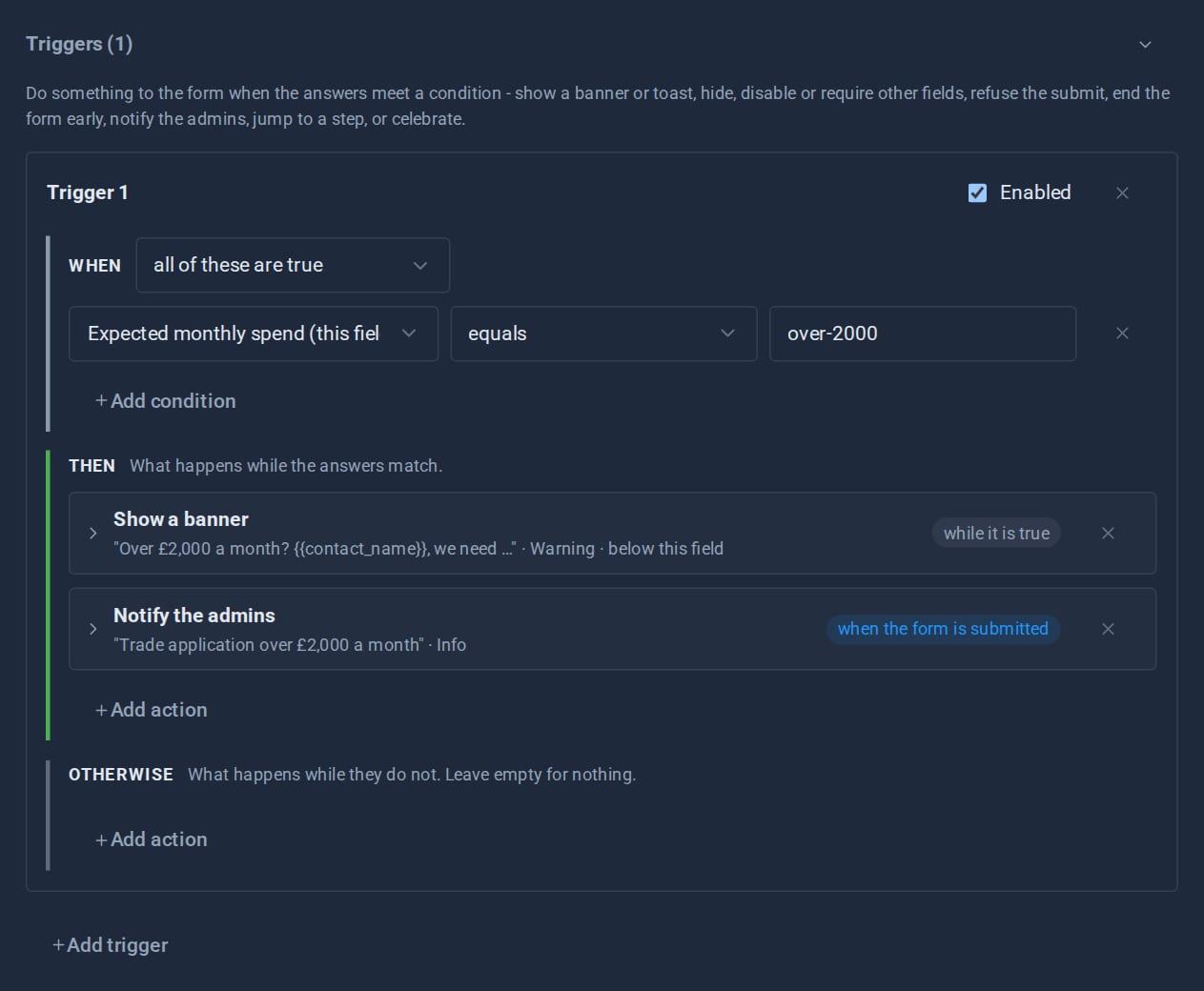
Forms that react: triggers and conditional logic
Show a field only when it matters, warn before a visitor goes further, end a form early, jump a wizard step, tell the admins - all set up in the form editor, and all re-checked on the server.
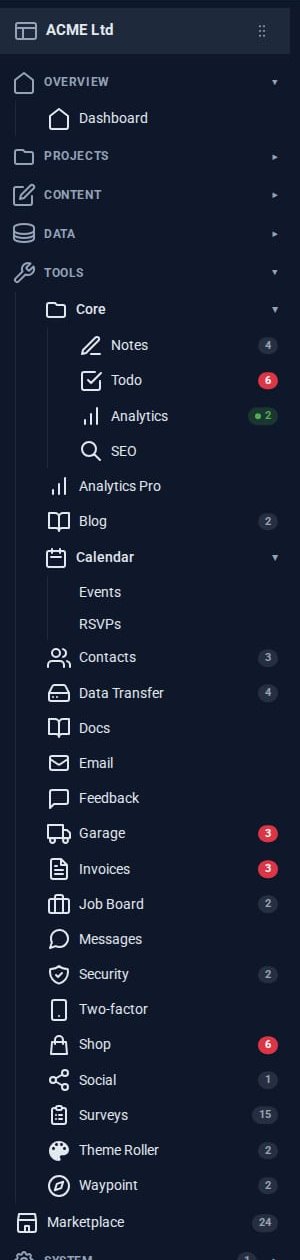
The Pro Suite: one umbrella, not nineteen apps
A small business usually pays for a mail app, a CRM, an invoicing service, a shop, a project board and a survey tool - and copies data between them. The Pro Tools share one admin instead.